15 Amazing Mushroom Crochet Ideas You Can Make This Weekend
Discover 15 mushroom crochet ideas you can make this weekend, with cute designs for decor, gifts, and every skill level, plus creative inspiration and more.
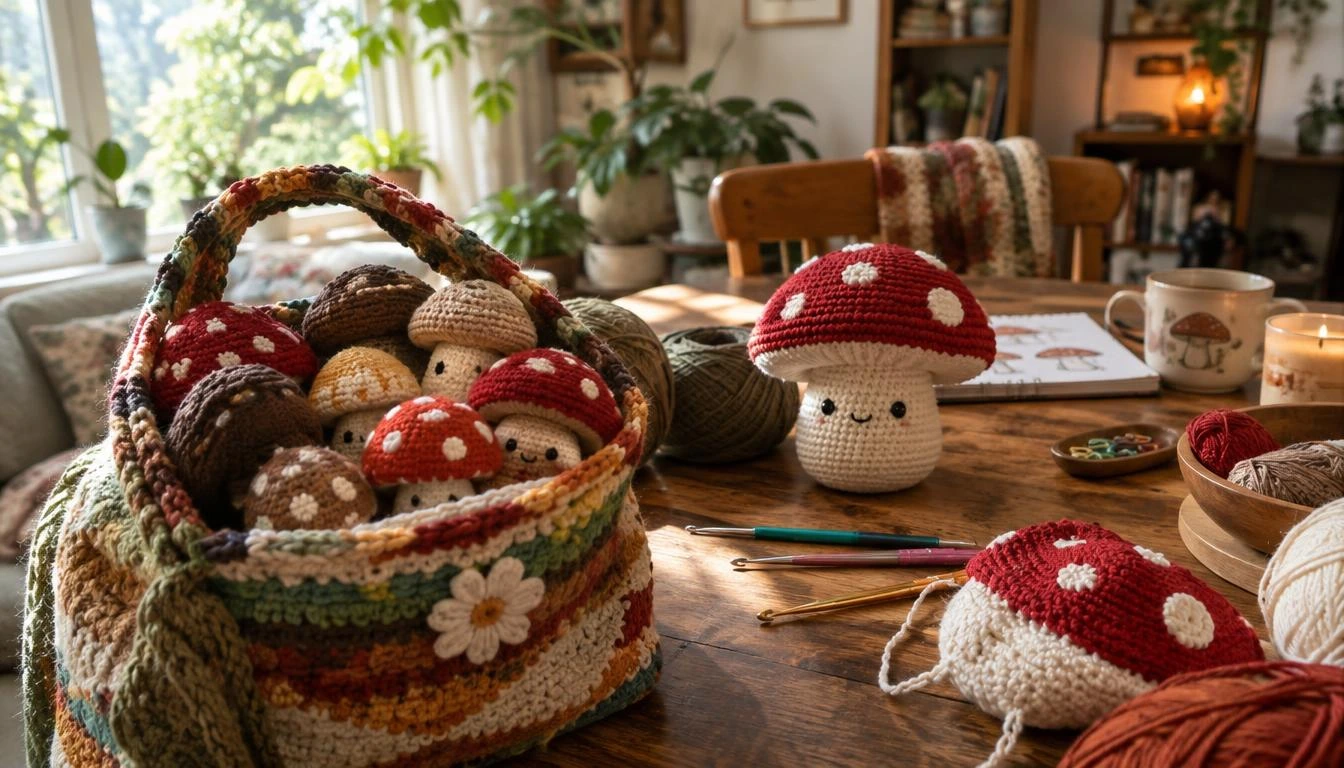
Table of Contents
Could mushroom crochet turn your weekend craft session into a choice between a playful bag, a small plush, and a cozy home accent? You might have an afternoon free, a favorite hook ready, and one project in mind, but not know which pattern fits your plans.
Amigurumi are crocheted stuffed figures, often made in continuous rounds. This roundup includes wearable accessories, soft characters, and decor, with ideas for different skill levels and uses. Your progress depends on the pattern, your experience, and how much time you have, so a weekend does not guarantee every project’s completion.

A small accessory may fit neatly into a few free hours, while a detailed design may need more time. You can still use the weekend to begin, make the main pieces, or finish a project already underway. Choose by what you want to use or give, then consider the pattern’s demands.
You’ll find a quick way to compare each idea by its purpose and skill level, starting with how to narrow your choices.
How to Choose a Mushroom Crochet Project for Your Weekend
The best mushroom project is the one that suits its intended use and the time you have available. A small carry item, a gift, and a home accent serve different purposes, so begin with the reason you want to crochet before choosing among patterns.
Then look at the pattern itself. A weekend gives you a chance to make progress, but it does not guarantee you will finish every design. The number of pieces, added details, and your comfort with the stitches all affect how far you get.

Start with the finished object’s purpose
Wearable accessories let you carry a mushroom theme on outings or add it to an everyday outfit. A gift can be a soft companion for someone who likes whimsical designs. Home accents suit a shelf, desk, or cozy corner, where you can enjoy the finished piece without needing to carry it.
Think about where the object will go after you make it. A bag needs to hold what you plan to carry, while a decorative piece needs a suitable display spot. For a gift, consider whether the recipient prefers something useful, something soft, or a small accent for home.
Match the pattern to your time and skill
A beginner may find a small, simple shape more manageable than a multi-piece item with assembly or embellishment. A pattern that calls for several parts can still be a good choice, but allow time for joining and finishing. Read its instructions before counting on a quick finish.
Use these three checks before you choose:
- Read the pattern’s stated skill level and see whether it matches your experience.
- Check the materials and assembly requirements, including separate pieces or added details.
- Decide whether you have time to crochet and finish each separate piece.
Yarn and stitches matter, but you do not need to compare every technical detail before deciding what you want to make. Start with a pattern whose steps you can follow, then check that your available time fits its construction. The next three sections group 15 ideas by the kind of finished project you want.
Which Mushroom Crochet Accessories Can You Use Every Day?
A small mushroom bag can carry your market-trip essentials while showing your style. Other crochet mushroom patterns work as backpacks, mini bags, or hats, so you can choose a design for daily wear, outings, or storing smaller items.
These accessories offer different sizes and features. Use the table to compare the pattern’s form with the kind of use you have in mind. A mushroom bag for a few items will serve a different purpose from a backpack or hands-free crossbody.

| Pattern | Project type | Useful detail | Best use |
|---|---|---|---|
| Craig’s Cottage Big & Small Mushroom Dice Bag | Dice bag | Can be adapted into a small bag | Dice or small-item storage |
| Kit and Kaboodle Co’s Mushroom Bag | Bag | Suited to a local market or craft show | Carrying outing essentials |
| Mama Kass Krochet’s Shroom Backpack | Backpack | Shown small, with room to customize larger | Festivals, daily wear, or a larger child’s bag |
| Meemanan Patterns’ Mini Mushroom Bag | Mini bag | Wallet-size | Carrying a few small essentials |
| Hello Happy’s Crossbody Mushroom Bag | Crossbody bag | Worsted-weight yarn and a zipper | Hands-free carrying |
The Shroom Backpack is shown in a small size, and you can customize it larger. That makes its scale a useful point to consider before starting. Decide what you want it to carry, then check the pattern’s directions for the size you plan to make.
The Mini Mushroom Bag is wallet-size, while the Crossbody Mushroom Bag uses worsted-weight yarn and includes a zipper. Those details help you picture how each design might work for your belongings. Check the pattern’s construction and finishing steps before choosing based on appearance alone.
For a tea-party look, LittlexHumanCrochets’ Amanita Mushroom Cap Hat offers a mushroom-inspired option to wear. Crochet By Lynzi Shop’s Forage Fairy Bucket Hat includes toadstool granny squares and is intended for everyday wear. Either hat can bring the theme to an outfit without adding another bag.
Think through the occasions when you would use an accessory, not only how it looks in a photograph. A smaller bag can keep a few items together, while a backpack or crossbody leaves your hands freer. After choosing what to carry or wear, you can move on to small characters that make charming gifts.
Which Mushroom Crochet Characters Make Charming Gifts?
A soft, forest-inspired companion can make a thoughtful gift for someone who enjoys whimsical characters. An amigurumi mushroom gives you a small figure to hold or display, and three distinct designs offer different ways to bring personality to the shape.
Character details change the mood of a plush. A face can make a small figure feel friendly, while a mushroom-and-gnome combination adds a storybook quality. Look at the pattern’s finishing details and choose a style that feels right for the person receiving it.

| Pattern | Character detail | Gift appeal |
|---|---|---|
| Quinn the Little Mushroom by Critter Stitch Designs | A small mushroom with a face | A sweet amigurumi gift |
| Crochet Mushroom Buddy by Stitch by Fay | A friendly mushroom figure | A playful companion |
| Mushroom Gnome by Natty Toys | A mushroom and gnome form, with spots formed through simple stitches | A character gift for a cottagecore fan |
Quinn the Little Mushroom has a face, while Crochet Mushroom Buddy is described as a friendly figure. Those character cues can help you choose a design for someone who likes expressive soft toys. Check each pattern’s own details to see how its face and other features are made.
The Mushroom Gnome combines a mushroom form with a gnome. Its spots are formed through stitches, making the pattern’s surface detail part of its character. That combination may suit a recipient drawn to cottagecore looks or storybook figures.
Some makers prefer the plain plush look of a simple shape. Others may like embroidered or crocheted details that give a figure more expression. Either approach can work as a gift; use the pattern’s instructions for the details rather than assuming one finish is required.
Choose a pattern with details you feel ready to make and a character the recipient might enjoy keeping nearby. A small figure can feel personal without needing extra embellishment. If you would rather make something for a shelf or room, mushroom shapes also work as home decor.
What Mushroom Decor Can You Make for Your Home?
A small corner of a room can look more cheerful with one handmade mushroom accent. Mushroom patterns range from tiny display pieces to a large plush or a repeating square, giving you choices for a shelf, blanket, or indoor fairy garden.
Before you settle on a project, picture where the finished piece will sit or how you will use it. A motif can join a larger make, while a miniature house works as a standalone accent. The table compares five ideas by form and possible use.

| Project | Form | Suggested use | Distinctive detail |
|---|---|---|---|
| Woolay Mo’s mushroom collection | Small crocheted mushrooms | Arrange as a home display | Yarn colors create natural or whimsical looks |
| Mama Kass Krochet’s Chonky Mushroom | Oversized plush | Pillow or stuffie | Designed for super-bulky yarn, with cap spots |
| Sleep Frog Crochet’s Mushroom Granny Square | Square motif | Blanket or another square-based make | Adaptable repeating motif |
| Woolay Mo’s Mushroom House | Miniature house | Indoor fairy garden | Detailed cottagecore-style accent |
| Shrimpink’s tiny crochet mushroom | Tiny accessory-sized mushroom | Keychain or brooch | Choose the finish for its intended use |
Woolay Mo’s mushroom collection gives you small pieces to arrange together or display individually. Yarn colors can create natural or whimsical looks, depending on the mood you want for the room. Consider the surface and space available before choosing how many to make.
Mama Kass Krochet’s Chonky Mushroom is an oversized plush designed for super-bulky yarn, with spots on its cap. Its form can work as a pillow or stuffie. Sleep Frog Crochet’s Mushroom Granny Square offers another scale: a repeating motif for a larger project.
You can use that square in a mushroom crochet blanket or another project that calls for granny squares. Repeating one motif helps create a connected look across a larger piece. Check the pattern for how its square is formed and what finishing the larger project will need.
Woolay Mo’s Mushroom House is a miniature cottagecore-style accent for an indoor fairy garden. For a much smaller item, Shrimpink’s tiny crochet mushroom can become a mushroom crochet keychain or a brooch. The finish depends on how you want to use that little shape.
Think about whether your decor should be soft, useful, or simply something to look at. A small accent may suit a shelf, while a square can become part of a larger home project. Once you have chosen a finished object, look for a free pattern that fits your skill and materials.
Where Can You Find Free Mushroom Crochet Patterns?
A free pattern is a good way to test a style, as long as its materials and instructions suit you. Two options offer different construction approaches, from a small cap-and-stem shape to a figure with several joined parts.
Free designs are not all written for beginners, so assess the steps before you begin. Check what the pattern asks you to make and whether you already know the stitches and assembly methods it uses.
Pick a free design with a clear construction method
Thoresby Cottage’s free crochet mushroom pattern offers two cap styles, uses DK-weight yarn, and begins with a magic ring. That gives you a clear starting point and a choice of silhouette. Read through the remaining instructions to see whether the shape and steps suit your plan.
The free Mushroom Friend pattern has joined legs, a body and head, and a separate cap. That construction calls for more than one part, so account for the joining work when deciding whether it fits your available time. A free crochet mushroom can still involve several stages.
Check the yarn, cap style, and pattern terminology
Before following a pattern, check whether it uses UK or US stitch terms. The same stitch name can refer to different stitches in those systems, so use a version you understand. Also read the materials and assembly notes before beginning.
Searches for mushroom crochet patterns free can turn up different shapes and construction styles. A small mushroom crochet pattern free may suit you if you want a compact form, but size alone does not show how complex its steps are. A simple mushroom crochet pattern free is only a good fit when its stated skills also match yours.
Check how the cap is formed, what yarn the instructions specify, and whether the design needs separate pieces joined together. Those details matter more than the word “free” when you want instructions you can follow comfortably. Once you have chosen a pattern, you can check the stitches and tools it asks you to use.
What Skills and Supplies Do These Patterns Need?
Many mushroom designs rely on a small set of familiar stitches, while the pattern determines the exact skills and supplies you need. Check its skill level and abbreviations before beginning, especially if you are looking for an easy mushroom crochet pattern.
A clear pattern should name its stitches and explain any less familiar steps. The stitch names depend on whether the instructions use US or UK terminology, so confirm the terms before you start counting rounds or shaping a cap.
Learn the stitches used in common designs
Single crochet, double crochet, and slip stitch are common stitches to recognize. The exact stitch terms depend on whether the pattern uses US or UK terminology. Look at the abbreviation key, then make sure its language matches the stitch names you know.
Even a familiar crochet stitch can appear in a new sequence when a pattern shapes a stem or cap. Check the pattern’s stated skill level and stitch abbreviations before beginning. That small review can show whether you need a tutorial for any technique.
Gather tools for stuffing and assembly
Check the pattern against these four supplies:
- The specified yarn and hook, including the pattern’s stated hook size.
- A stitch marker for tracking rounds.
- A yarn or tapestry needle for joining and weaving in ends.
- Stuffing or yarn scraps when the design calls for filling.
Many amigurumi patterns use continuous spiral rounds, with a marker showing where each round ends. Keep your stitches tight enough to prevent stuffing from showing through. A pattern may also ask you to join separate cap and stem pieces after crocheting them.
One pattern’s listed materials include a 3 mm hook, stitch marker, tapestry needle, and toy stuffing or yarn ends. Your own project may call for different items, so follow its supply list rather than assuming every design uses the same set. Fiber and hook choices can also change the finished look and size.
How Do Yarn and Hook Choices Change the Finished Mushroom?
The same Mushroom Friend design measures 8, 9, or 10 inches tall with three listed yarns. That comparison shows how yarn choice affects the result, but it is not a universal sizing rule for every crochet pattern.
Use the figures as examples for this one design, not as a promise about other yarns or hooks. A different pattern, tension, or substitution can change the finished mushroom’s height and texture.
Compare yarn options by the size they produce
| Yarn | Finished height | What the comparison tells you |
|---|---|---|
| Premier Parfait Chunky | 8 inches | The smallest of these three examples |
| Bernat Blanket Yarn | 10 inches | The largest of these three examples |
| Sweet Snuggles Lite | 9 inches | Between the other two examples |
These measurements describe the same Mushroom Friend design made with Premier Parfait Chunky, Bernat Blanket Yarn, and Sweet Snuggles Lite. The yarn affects the result, and the figures do not predict a different mushroom’s finished size. Compare the pattern’s intended materials before substituting.
Check the pattern’s gauge and finishing needs
Tension can affect a project’s fit and appearance. For one amigurumi design, the guidance says tension is not important as long as stitches stay tight enough to hide stuffing. That instruction applies to that project, not automatically to every pattern.
Check the pattern’s hook size and yarn weight before making a substitution. The three-mushroom pattern uses a 3 mm hook, but that does not establish the right hook for another design. A changed hook may alter the fabric or finished scale.
Do not assume another hook will preserve the listed dimensions. Follow any gauge or sizing notes the pattern provides, and keep the stuffing hidden where the design calls for a filled figure. Once you understand the likely physical result, you can personalize the project for its recipient.
How Can You Personalize a Mushroom Crochet Gift?
Natural colors can make a subtle shelf display, while bright shades can turn a small gift into a playful accent. Choose colors and finishing details that suit the recipient, then make sure the object will work for the way they plan to use it.
A wearable accessory, a room accent, or a soft figure can each feel personal in a different way. Think about where the gift will go and whether its recipient would rather carry it, display it, or keep it close. The right finish starts with that practical choice.
You can also use a granny-square motif as one part of a larger make. Repeating squares can bring a mushroom theme into a blanket or another square-based project. Pick a color arrangement that suits the rest of the item instead of treating each motif as a separate design.
The three-mushroom pattern includes Penny Bun, Amethyst Deceiver, and Fly Agaric examples. Their designs can inspire choices in color and embellishment without requiring you to copy any one mushroom. You can borrow a natural-looking palette, choose stronger colors, or use the examples as a prompt for a detail of your own.
Keep decoration suited to the project’s purpose. A small item meant for everyday use should still be easy to carry or wear, while a shelf piece can focus more on appearance. Follow the pattern’s construction notes when adding features so the finished object remains secure.
One specific addition can help a crocheted mushroom stand freely: weighted coins placed at the bottom. Avoid coins if children are likely to play with the item. Choose a safe finish for the person who will handle it, then shift your attention to a practical order of work for the weekend.
How to Plan a Mushroom Crochet Project Across Your Weekend
A workable weekend plan includes finishing steps as well as the main stitching. Some makers may complete a small project, while a larger or more detailed design may only reach a useful stopping point.
Set aside time for each part instead of treating crochet as the only task. A project can require several pieces, embellishment, stuffing, or joining before it is ready to use. Your pattern’s construction details will show what to expect.
Before you begin, check the pattern
Read the complete pattern before making the first stitch. Gather the stated materials, and look for a tutorial if the instructions include an unfamiliar technique. Check whether the design has separate pieces or embellishments that will need their own time.
Look for details about the starting ring, rounds, and construction order. A pattern that has separate caps and stems will take a different path from one made as a single shape. Knowing the sequence helps you plan your work without assuming that every part can be finished quickly.
Work through the making and finishing steps
Follow the pattern in order and leave time for stuffing, joining, embroidery, weaving in ends, or other finishing steps when required. The three-mushroom pattern works caps and stems separately, then embellishes, stuffs, and joins them. Amigurumi instructions may use a stitch marker to track continuous rounds.
Divide your available time into three practical stages:
- Prepare materials and read the instructions.
- Crochet the main pieces.
- Assemble and finish the project.
Use those stages as a flexible order, not a deadline. If the crochet takes longer than expected, you can stop after a complete piece or round and return to it later. Keep any separate components together so you can find them when you resume.
Finishing can include more than joining parts. A project may need embroidery, ends woven in, or a final check of its shape. Follow the pattern’s notes, and avoid rushing those steps just to call the work complete before the weekend ends.
Choose one project, set out its supplies, and begin with the first pattern step. That gives you a clear place to start, while leaving room for the project to take the time it needs. Your next decision is simply which pattern fits the purpose and time you have.
Conclusion
The right mushroom project fits your purpose and the time you actually have. Choose by intended use and skill level, then check the materials and finishing steps before you start.
A small gift or home accent may suit your plans better than a detailed design with several parts. You do not need to finish everything in one weekend to make useful progress.
Pick one pattern and gather its listed supplies. Set out the yarn and tools, then begin with the first instruction.
FAQ
How to crochet a mushroom for beginners?
Choose a pattern that names its skill level, uses familiar stitches such as single crochet, and clearly lists assembly materials. Read its abbreviation key before starting, because UK and US stitch terms can differ. A compact shape with fewer separate pieces may be easier to manage than a design with several parts, embellishments, and joining steps.
What color is mushroom yarn?
There is no single required yarn color for a crocheted mushroom. Natural shades can create a woodland look, while bright colors can make a more playful gift or display. Choose the finish you want and follow the pattern’s color instructions, especially if the design assigns different shades to the stem, cap, spots, or details.
How to crochet a mushroom guy?
Most character-style designs involve crocheting the body and head, making a separate cap when the pattern calls for one, then assembling the parts. Add stuffing at the stage the instructions specify, and use the pattern’s joining method. Facial details can come last, so you can place them where they give the figure the expression you want.
How much yarn do I need for a crochet mushroom?
There is no universal yarn amount, because the pattern, finished size, and yarn choice affect how much you use. One Mushroom Friend pattern lists about 50 g of body-color yarn and about 20 g of cap-color yarn, plus small amounts for details. Use your chosen pattern’s materials list for its specific design.
Do crochet mushrooms need stuffing?
Stuffed amigurumi figures generally use toy stuffing or yarn scraps to fill their shape. Flat motifs, such as a granny square, and other unstuffed designs do not need filling. Check the pattern’s construction notes before gathering supplies, because some designs use stuffing only in selected parts rather than throughout the whole piece.
Can a crochet mushroom stand on its own?
Yes, a weighted base can help a crocheted mushroom stand freely. Coins are one stated method for adding weight, but avoid them if children are likely to play with the item. For a display piece, follow the pattern’s construction advice and make sure any added weight stays securely enclosed.