Beautiful Crochet purses and bags patterns free Easy DIY Ideas
Explore Crochet purses and bags patterns free with easy DIY ideas, stylish designs, and clear inspiration to help you choose your next handmade project.
Table of Contents
Planning a summer outing, could a handmade bag suit your plans better than a store-bought one? Crochet purses and bags patterns free give you options from compact everyday designs to larger warm-weather styles. Your skill level, intended use, and preferred look can guide your choice.
You can choose a project for a few essentials, a day at the beach, or errands that call for more room. Color and shape help set the style, while construction affects how much assembly the project needs. Gauge is the number of stitches and rows in a specified measurement, used to check whether your finished work will match the pattern’s size.
Some designs start with simple shapes; others build a bag from squares or motifs. Narrow your options first by the kind of project you want and the construction you prefer.
How to Choose a Crochet Bag Pattern for Your Skill Level
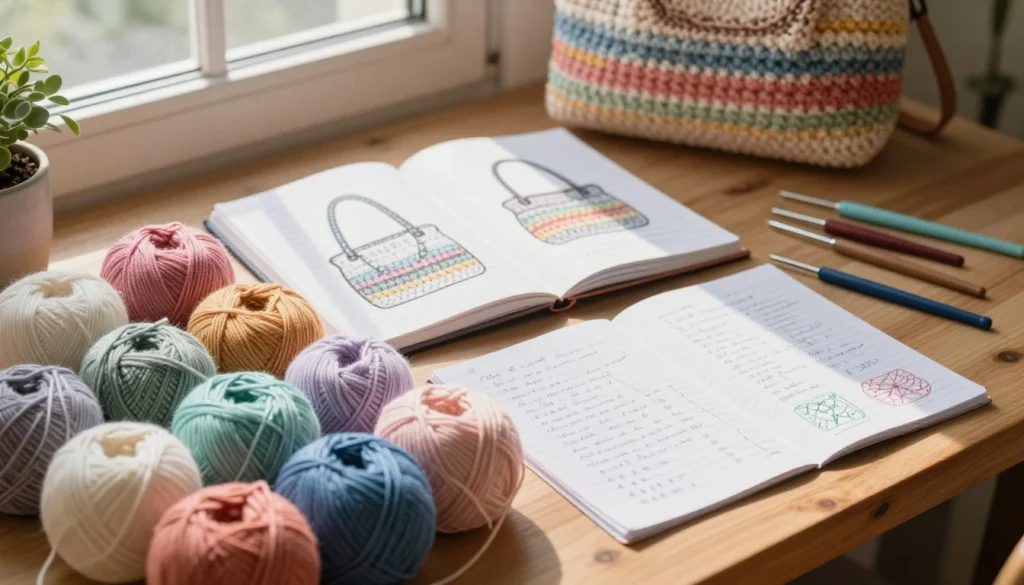
The best first pattern is one whose construction and stitches you can manage, not simply one labeled easy. Before choosing a free crochet bag pattern, check how it will be used and whether its yarn, stitch work, and assembly suit your experience.
- Intended use: Decide whether you need a purse, grocery bag, or project carrier.
- Capacity: Compare the finished measurements with the items you plan to carry.
- Stitch familiarity: Look for patterns using stitches you already know or can learn.
- Construction method: Check whether the body is worked flat, in rounds, or in pieces.
- Yarn requirements: Confirm the yarn weight, amount, and color changes before starting.
A simpler stitch does not always make a simpler project. A basic stitch can still require shaping or joining pieces, and unfamiliar assembly may take more effort than learning a new stitch.
| Construction | How the body is formed | Typical finishing task | Good fit |
|---|---|---|---|
| One-piece rectangle | A flat rectangle folds to form the body | Join the sides and add a strap | First bag projects |
| Two circles | Two round panels form the front and back | Join the circles around their edges | Compact purses |
| Joined squares | Separate squares are joined into a bag shape | Connect the squares and finish the edges | Motif-based designs |
Use the bag pattern’s construction notes, not its title alone, to judge the work involved. Once you know which method feels manageable, you can compare free purse styles by shape and capacity.
Crochet Purses and Bags Patterns Free for Different Styles
A compact purse works well when you only need a phone, keys, and a few small essentials. Free crochet options made from circles or squares give you different silhouettes and capacities without requiring a full-size bag.
Round Purses Made from Simple Shapes
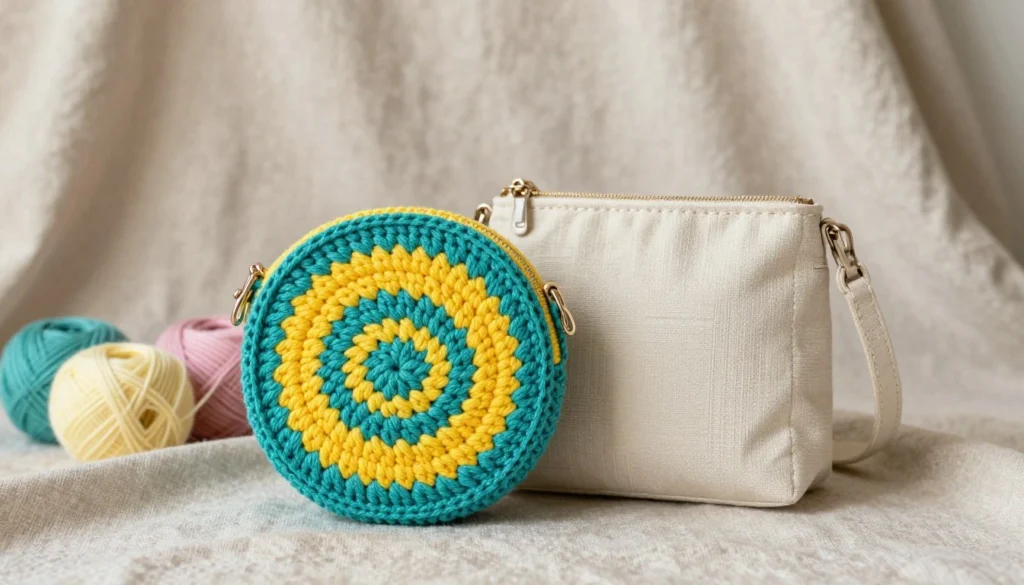
The Round Crochet Hippie Purse uses two circles to create its front and back, with #4 worsted or Aran yarn. This shape gives the purse a rounded outline, while its depth depends on how the sides are joined and finished.
The Rising Sun Bag also uses two circles, but calls for #3 light or DK yarn. That lighter weight creates a different scale and feel from the Hippie Purse. Check the pattern measurements before starting if you want a particular amount of room inside.
Circle-based construction offers a distinct alternative to a rectangular body. It can suit a small carry, but the finished capacity still determines whether your phone, wallet, and other essentials fit comfortably.
Granny-Square Bags and Phone Slings
The Halcyon Granny Square Sling Bag is a compact on-the-go project made with #4 worsted or Aran yarn. Its square-based form gives it a recognizable motif look and enough space for a small set of daily items.
The Starburst Granny Square Phone Sling uses #3 light or DK yarn and adds a pocket. That extra compartment can separate a small item from the phone, while the sling shape keeps the overall design compact.
These purse patterns make shape and capacity easy to compare: a square sling carries a few essentials, while the pocketed phone sling adds a separate spot for a small item. A small phone sling will not replace a larger everyday bag. For groceries or more summer essentials, consider bags built for greater capacity.
Which Free Crochet Tote Bag Patterns Work for Errands?
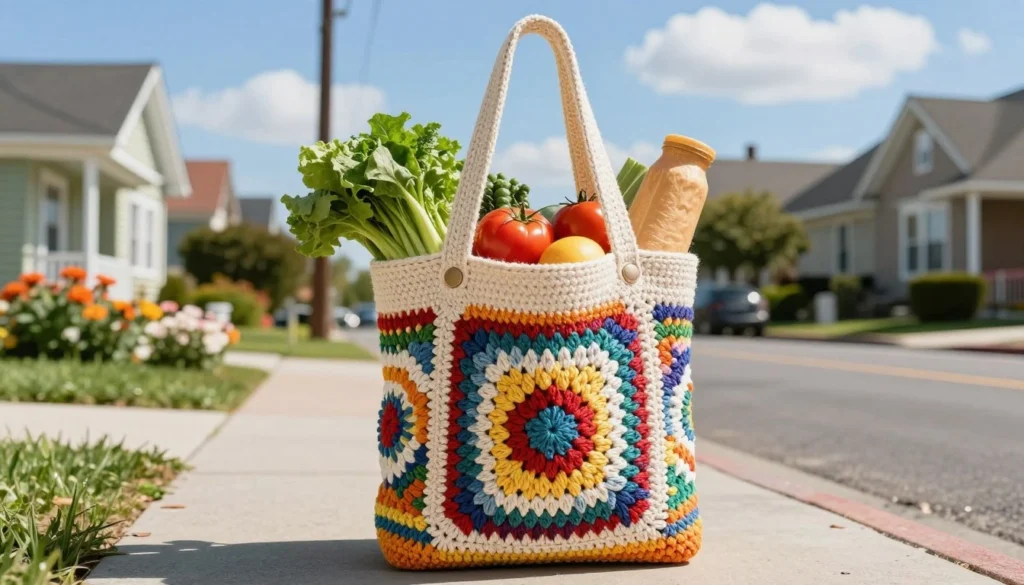
A grocery run or beach day often calls for more room than a compact purse can offer. A free crochet tote bag or market design can carry larger items, with the stitch pattern shaping both its look and function.
Market Bags for Shopping
The Sea Shells by the Shore Market Bag by Nana’s Crafty Home uses self-striping yarn to create its colorwork. The yarn shifts colors as you work, and the pattern includes a video tutorial to help you follow its construction.
The Fraîche Tote Bag by Sewrella features the thermal stitch, which gives the fabric a distinctive texture. Its photo tutorial lets you follow the steps visually. Both options can suit errands, though the finished size and fabric density affect what they can carry.
An open, airy market-bag fabric may be a poor choice for small items such as loose keys or coins. Add a suitable lining or carry a small pouch inside to keep those items from slipping through the stitches.
Totes for the Beach and Everyday Use
The Sweet Summer Sunflower Bag by Crochet 365 Knit Too uses motifs to build a bright, recognizable design. Motifs create visual interest, so this tote can make a warm-weather project feel decorative as well as useful.
The Hibiscus Tote Bag by Pattern Paradise uses tapestry crochet, a technique that works color changes into the fabric. That gives the bag a patterned surface rather than relying on self-striping yarn or separate motifs.
For a tote, consider the items you plan to carry and how closely the fabric is worked. A denser design may better contain everyday belongings, while a more open pattern can work for larger, less delicate items. If you want a smaller bag that keeps essentials together, a clutch or compact purse may suit you better.
What Free Crochet Clutch and Small Purse Patterns Can You Make?
If you only need your phone, keys, and wallet for an outing, a clutch or small purse can be enough. These free crochet patterns range from a fold-over design to scrap-yarn projects and a simple single crochet option.
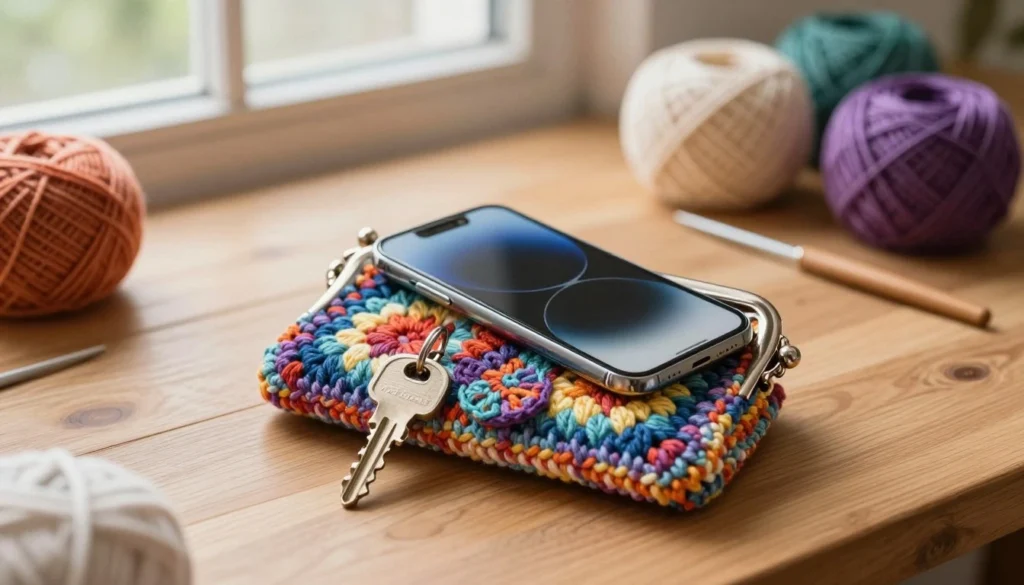
- The Chevron Fold Over Clutch by Ned & Mimi for E’Claire Makery can be worn full length or folded over. Its pattern includes a lining tutorial.
- The Scrapadoodle Clutch by Crafting for Weeks is a wristlet that uses leftover yarn, making it a practical small project for saved scraps.
- The Left Over Yarn Purse by By Katerina holds multiple strands of scrap yarn together and includes a video tutorial.
- The free Crochet Clutch pattern from My Crochet Space uses single crochet, a familiar stitch for many beginners.
- The Saturn Clutch is a beginner-friendly free pattern sized for essentials and made with #3 light or DK yarn.
The designs serve different needs: the Chevron clutch changes shape when folded, while the Scrapadoodle and Left Over Yarn projects make use of leftover strands. The single-crochet clutch offers a straightforward stitch choice, and the Saturn design stays small enough for essentials.
Check the stitch gaps and intended contents before deciding whether a clutch needs a closure or lining. A tightly worked fabric may hold small items on its own, while a more open design can let them slip out.
A wristlet or hand-held purse suits a light load, but it may not be comfortable when you need both hands free. Shoulder bags and backpacks offer another way to carry daily essentials.
Which Crochet Shoulder Bags and Backpacks Suit Daily Use?
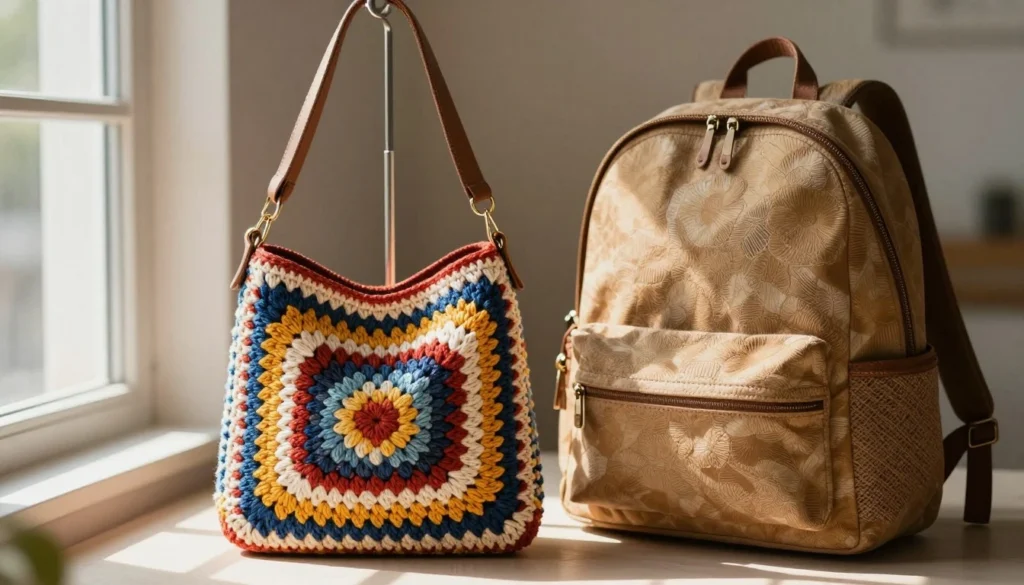
A shoulder bag or backpack is more useful than a clutch when you need your hands free for a commute, errands, or carrying a project. The right free crochet bag pattern depends on how you want the weight to rest and what you need to bring.
Shoulder Bags and Crossbody Styles
The Belmont Bag by Stitching Together is a simple shoulder bag made with a variation of half double crochet. Its stitch choice gives the design a clear texture without relying on a complex motif or color pattern.
The Mudcloth Cinch Bag by Yarn + Chai takes its inspiration from traditional Malian mudcloth. Its cinch design stands apart from a conventional shoulder bag, with a visual reference that shapes the finished look.
For longer periods of carrying, strap placement and secure attachment matter. A strap that pulls at a weak point can make the bag uncomfortable or less reliable, especially when you carry more than a few light items.
Backpacks and Drawstring Bags
The Wanderlust Chevron Backpack by A Crocheted Simplicity uses bold colors to emphasize its chevron design. It is a distinctive option if you want a backpack with a strong color pattern.
The Herringbone Crochet Backpack is made from two matching rectangles and uses #4 worsted or Aran yarn. Its two-piece body offers a simple shape, while the herringbone texture gives the fabric a recognizable finish.
A backpack distributes its load across both shoulders, while a shoulder bag rests on one side. Compare the pattern’s shape and strap layout with how long you expect to carry it. After choosing the form, consider yarn and stitches that suit the bag’s intended use.
What Yarn and Stitches Make a Crochet Bag Sturdy?
A sturdy crochet bag needs materials and fabric density suited to what it will carry. Yarn, stitch choice, and the design all affect the bag’s structure, feel, and response to weight.
| Material | Typical feel or behavior | Useful bag application | Tradeoff |
|---|---|---|---|
| Cotton | Often firm with limited stretch | Reusable shopping bags | Can feel heavier than lighter options |
| Acrylic | Soft and available in many colors | Light-use purses and bags | Can stretch under a heavy load |
| Raffia | Light and crisp in many designs | Warm-weather bags | Can feel less flexible than yarn |
Dense stitches such as single crochet generally create firmer fabric than open mesh. Open stitches can make a lighter bag, but small items may pass through unless you use a pouch or lining.
The best material and stitch depend on the design and its load. A very stretchy yarn used for a heavy everyday bag can lead to sagging as the contents pull on the fabric.
Think about the shape the fabric needs to hold, not only its texture in your hands. Once the stitch and material suit the job, finishing choices help the completed bag work well.
How Do You Finish and Customize a Crochet Bag?
Before loading a finished crochet bag, tug gently on its strap and check that the attachment feels secure. A few final checks can help you catch loose ends, an unsuitable closure, or fabric that needs a lining.
- Strap attachment: Check that the strap is firmly joined where it meets the bag.
- Loose ends: Weave them in so they do not catch on items or unravel.
- Closure: Make sure the opening suits what you plan to carry.
- Fabric and lining: Decide whether the stitches contain small items securely.
A lining is optional for tightly worked fabric, but it can contain small items or support a more open design. It does not replace securely attached straps. Choose a closure that keeps the contents in place without making the bag awkward to open.
Small finishing choices can change how useful the project feels once you carry it. Choose a suitable pattern and begin with a gauge swatch if the finished size matters.
Conclusion
Choose a crochet bag pattern that fits both your intended use and your skill. The shape should hold what you plan to carry, while a manageable construction gives you a better starting point than an ambitious detail.
Before beginning, check the pattern’s yarn and gauge requirements. Gauge can affect the finished size, so make a swatch when fit or capacity matters. That simple first check can help you avoid a bag that turns out smaller or larger than expected.
Pick one free pattern that suits your plans, then gather the specified yarn and tools before you begin the project.
FAQ
How much yarn do you need for a crochet bag?
The pattern’s yardage is the most reliable guide for how much yarn to buy. The total changes with the bag’s size, stitch density, strap length, and yarn weight. Buy enough for the full project, including any stated color changes. If the pattern includes a lining, check whether it lists separate materials for that part.
What is the best yarn for a crochet market bag?
Sturdy cotton is a common choice for a reusable market bag because it can create a firm fabric. Lighter alternatives may suit designs that prioritize low weight, but the pattern’s recommended fiber and stitch structure should guide your choice. Consider the typical load, too: a bag for groceries needs to handle more weight than one for a few light items.
Do crochet bags need a lining?
No, a crochet bag does not always need a lining. Tightly worked stitches may contain belongings well, while open stitches can let small items slip through. A lining is more useful if you plan to carry keys, coins, or other small contents in an airy design. It can also provide support, but it cannot make a weak strap attachment secure.
How do you stop crochet bags from stretching?
Use a denser stitch and attach the strap securely to help limit stretching. A lining can support the fabric, but a heavy load can still stretch a loosely constructed bag. Match the bag’s size and construction to what you expect to carry. If the design has open stitches or a long strap, avoid treating the finished bag as suitable for every load.
Can you use acrylic yarn for a crochet bag?
Yes, you can use acrylic yarn for a crochet bag when it suits the pattern and expected load. Acrylic can be softer and more prone to stretch than a firm cotton fabric, so it may sag under heavy contents. Check the pattern’s yarn guidance and consider the fabric created by its stitches. A light-use purse places different demands on yarn than a loaded everyday bag.
What crochet bag pattern is easiest for a beginner?
A simple rectangle worked in single crochet can be a manageable beginner bag pattern. Familiar stitches and a basic shape reduce the number of new skills involved. Still, check the assembly steps before starting, since joining pieces or shaping an opening may be unfamiliar. A “beginner-friendly” label does not tell you how much finishing the project requires.