12 Adorable crochet bookmarks free patterns You Can Make
I share crochet bookmarks free patterns in a list of 12 adorable designs, with simple ideas for handmade page markers and gifts for book lovers today.
Table of Contents
You reach the end of a reading session and need to save your place. Would you fold the page, or tuck in a handmade marker instead? crochet bookmarks free patterns offer a small project with a useful purpose: you can mark your spot without creasing a page.
A crochet bookmark can also bring a personal touch to a favorite book, reading journal, or gift for book lovers. These small projects make room for color and character without requiring the time or materials of a larger crochet piece.
I’ve gathered 12 designs, from decorative motifs to playful characters, so you can look for a style that feels right to make. They vary in appearance and construction, giving you several ways to keep your place. Here is the collection.
Which Crochet Bookmarks Free Patterns Match Your Style?
This collection includes both understated crochet bookmark designs and character-led options, with flowers, lace, and bold motifs among the choices. Blocking means shaping a finished crochet piece while it is damp or exposed to steam, then letting it dry in the desired shape.
I’d start by noticing the silhouette you like, then checking how each pattern builds its decorative details. The descriptions below focus on what makes each design distinct, so you can scan the bookmark patterns before choosing one to try.

Classic, heart, and lacy designs
- Fan Bookmark: This design suggests eight fans, while one maker prefers nine for a fuller look. The repeated fan shape suits readers who like a decorative edge rather than a character motif. Choose it if you enjoy a pattern built around repeating sections.
- Heart Bookmark: Chains, single crochet, and double crochet form this heart design. Its familiar shape can appeal to anyone who prefers a sweet, simple motif. The mix of basic stitches also gives newer crocheters a clear way to practice changes in stitch height.
- Birgitta’s Bookmark: This option has a classic, restrained look for someone who wants a decorative page marker without a large character. Its name distinguishes it from the motif-based choices. I’d consider it when a simple silhouette feels more appealing than a bright, playful design.
- Lacy Bookmark: Open lace gives this bookmark a delicate appearance, making it a good match for readers who enjoy fine details. The pattern’s lacy character stands apart from solid shapes and bold motifs. Its openwork is the feature to consider when choosing the look you want.
Playful characters and bold motifs
- Strawberry Bookmark: Joey Diehl’s pattern on virkadia.com offers strawberry-with-leaf, flower-with-leaf, and strawberry-with-flower variations. Pick the version that best suits your preferred motif. The options make this pattern appealing to someone who likes fruit and floral details in one small design.
- Moustache Bookmark: Two colors and tapestry crochet create the moustache motif. This bold choice suits a reader who wants a humorous accent peeking from a book. Its color changes are part of the construction, so it offers a different kind of interest from a single-color strip.
- Shark Bookmark: The shark is a small scrap-yarn project, which gives leftover yarn a possible use. Jototheworld.com offers the pattern. Its recognizable animal shape is a fun fit for readers who enjoy ocean creatures or prefer a character-led bookmark over a classic design.
- Bookworm Bookmark: Increases and decreases shape the wiggly body of this character. Hearthookhome.com offers the pattern. Its curved form may appeal to readers who like a playful book companion, and the changing stitch counts help create the bookworm’s distinctive shape.
Flowers, fruit, and bookish details
- Flower Bookmark: A leaf sits at one end and a flower at the other. This design is a natural choice for someone who likes a small botanical detail with visible motifs on both ends. The two-part arrangement gives the bookmark a distinct look along its length.
- Striped Pencil Bookmark: Two colors create the pencil’s stripes, making this a recognizable choice for readers who enjoy school or art supplies. The simple color contrast gives it a bold look. Consider it if a familiar object feels more fun than a flower or heart.
- Daisy Bookmark: Regina P Designs at reginapdesigns.com joins multiple flowers as the bookmark is made. You can adjust its length, which suits a maker who wants control over how much of the page it spans. Its linked daisies give it a repeating floral design.
- Bookshelf Bookmark: Atelierdelilah.com’s design includes small books and a potted plant. Those details suit someone who loves a miniature library look. I’d choose it for the arrangement of bookish objects, rather than for a plain strip or single decorative motif.
Once a style catches your eye, compare how it is constructed and how much of the finished piece will rest between pages. That check helps narrow the pattern choices before you gather materials.
What Yarn and Hook Work Well for a Crochet Bookmark?
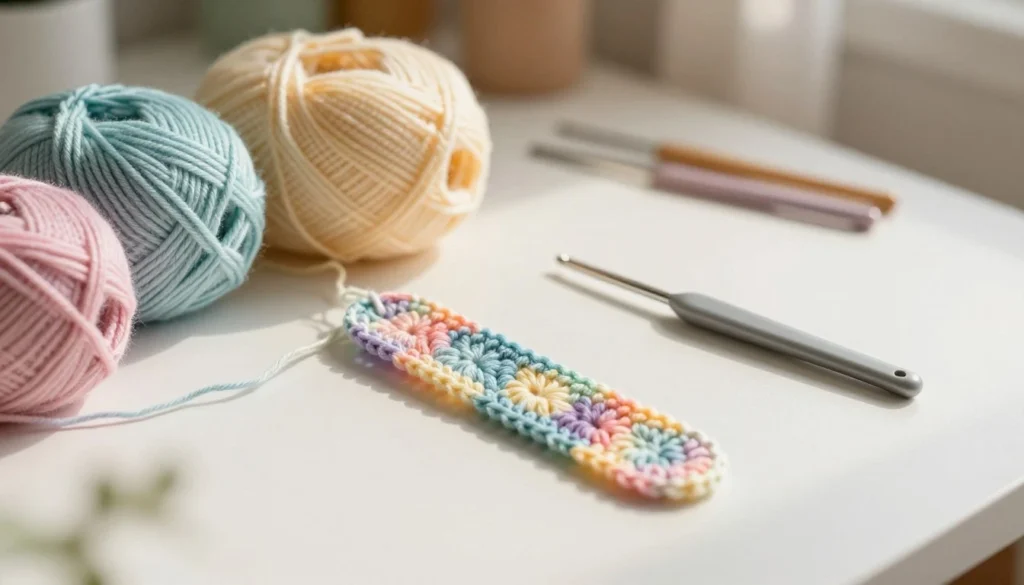
A thin page marker slips between closed pages more easily than a bulky one. For a crochet bookmark, lightweight yarn or thread can help keep the finished fabric comfortable inside a book without making the bookmark feel stiff or thick.
Choose a lightweight yarn or thread
DK, sport, fingering, and crochet thread are all options for lightweight bookmarks. The right choice depends on the pattern’s stitches and the fabric you want. A lacy design may call for a different feel than a solid strip, so use the pattern as your starting point.
Cotton generally holds its shape better than acrylic, but neither fiber is required. Cotton can suit a bookmark where you want the edges to stay defined. Acrylic can still work when it matches the pattern and gives you the finish you prefer.
Match the hook to your yarn and stitches
Use the hook size recommended by the pattern as a starting point. A smaller hook can create a tighter fabric, while a larger hook may make the stitches looser. The fabric should be neat but not so dense that the bookmark becomes firm and bulky.
I once chose yarn suited to a 1.25 mm hook because I preferred the resulting fine fabric. That was my personal preference, not a universal rule for every crochet pattern. Hook size depends on the yarn, your tension, and the pattern’s intended fabric.
Easy crochet designs may use familiar stitches, while lace or changing shapes can ask for more attention. Consider your comfort with the pattern and how you plan to use the finished piece before settling on materials.
How Do I Choose a Pattern for My Skill Level and Book?
Choose a pattern that matches both your confidence with its stitches and how flat the finished bookmark needs to sit. A slim design may fit comfortably inside a closed book, while a raised motif can be more noticeable between the pages.

The construction style gives you a quick way to compare crochet pattern options. Look beyond the main shape: a flat body can lie between pages while decorative ends sit outside the book, but raised details may press against the paper when it closes.
| Construction style | Typical form | Page-fit consideration | Good reason to choose it |
|---|---|---|---|
| Flat stitched strip | Narrow, even body | Lies between pages with little bulk | Simple shape and direct construction |
| Motif on a cord | Long cord with decorative ends | Cord rests inside; motifs may sit above pages | Distinctive ends with a slim center |
| Lacy edging | Openwork border or strip | Edges can catch if left loose | Decorative stitches without a solid body |
| Shaped character or object | Animal or familiar object | Raised parts may feel bulky when closed | Playful outline and recognizable detail |
A pattern’s stitch names and assembly steps also matter. Before you begin, check these four points:
- Comfort with the stitches used in the pattern.
- Number of separate pieces you will need to join.
- Amount of sewing or other finishing required.
- Whether a decorative part will protrude from the pages.
These checks help you choose a pattern that suits both your skills and the book you have in mind. With the construction decided, gather only the supplies that design calls for.
What Supplies Should I Gather Before Crocheting?
Set out your yarn needle and scissors before starting, so a small crochet project does not stall when you reach a loose end. The supplies depend on the pattern, but most designs need a few basic tools close at hand.

Use this short checklist to prepare your workspace without gathering tools you may not need:
- Chosen yarn or thread in the amount and color called for by the pattern.
- An appropriately sized crochet hook for that yarn and pattern.
- Scissors for cutting yarn after a color change or at the end.
- A yarn needle for weaving in ends or sewing pieces together.
- Pattern instructions, including any chart or stitch counts you will follow.
A motif-based design may call for joining or sewing supplies, while a simple strip may need no assembly. Read through the pattern first and note any separate pieces, color changes, or finishing steps. That way, you can keep your project moving without stopping to search for one small tool.
I like to place the pattern and tools within reach before I make the first stitch. If the instructions include a chart, keep it visible alongside the written steps. Ready supplies make it easier to focus on stitch counts and the shape as the work grows.
Once the setup is ready, even stitches and careful finishing help the completed piece lie neatly against a page.
How Can I Keep a Crochet Bookmark Flat and Neat?
A narrow strip that curls as it comes off the hook often needs a check of its tension or stitch count. Blocking means shaping a finished crochet piece while it is damp or exposed to steam, then letting it dry in the desired shape.

Keep the stitches even and check your count
Even tension helps a crochet bookmark look tidy, especially when the pattern includes lace or separate motifs. If some stitches pull tight and others sit loose, the edge may look uneven. Try to hold the yarn consistently, and pause to compare the piece with the pattern as you work.
Count stitches at the points the pattern specifies. A missed stitch or an extra one can change the width, which may cause an edge to slant or ripple. If the fabric feels too tight, loosening your tension or moving up a hook size may help, though neither change guarantees a fix.
For an edge that remains uneven, check the stitch count again before changing the pattern. A simple border can help neaten an edge when the design allows it. Keep the border consistent with the piece, so it does not add unnecessary width or bulk.
Block lace and secure the finished edges
A quick steam block or wet block can help a finished bookmark lie flat. For steam, shape the piece gently and use steam with care. For wet blocking, dampen the work, arrange it in the desired shape, and let it dry fully before using it.
Lace may need extra support to hold its open shape. Starch is one option, but use it only if it suits the yarn and finish you want. Shape delicate points without pulling them hard, since tension can stretch the stitches out of place.
Check that all yarn ends are secure before the piece goes into a book. A tidy finish protects the shape during use and makes the bookmark look complete. When the basic finish is neat, color changes and added details offer ways to make the design personal.
What Simple Changes Can Make a Bookmark Your Own?
A maker who wants a longer fan design can work nine fans instead of the suggested eight. A color change can also make the same crochet bookmark feel more personal without changing its basic form.
The adaptations below are optional, not requirements of the underlying patterns. Keep the original instructions as your base, then choose a change that suits your style and skill.
| Starting design | Change | Result or construction detail |
|---|---|---|
| Fan Bookmark | Make nine fans instead of eight | One extra fan creates a fuller repeat |
| Fan Bookmark | Work the fans in two colors | Color contrast highlights the repeated shapes |
| Heart Bookmark | Add a tail and tassel | The tail extends from the heart; tassel finishes its end |
| Birgitta’s Bookmark | Add single crochet around all four sides | A border frames the whole bookmark |
| Lacy Bookmark | Round the top with 28 treble stitches in the last fan, joining to the tenth picot of the previous fan | The joined fan forms a rounded top edge |
Each change adjusts a small feature while keeping the design recognizable. I’d choose one alteration at a time, especially when the pattern already has several parts to join. That makes it easier to see how the change affects the finished piece.
Color is an easy way to personalize a bookmark, while a border or tassel changes its outline. Once you know which details you want, you can make a piece for yourself or consider it as a thoughtful handmade gift.
How Can I Give a Crochet Bookmark as a Gift?
A crochet bookmark makes a small handmade addition to a book gift, especially when you choose details that feel personal to the recipient. I’d treat color and motif as ways to show thought, not as rules about what every reader will like.
Here are four gift approaches you can adapt to the person and occasion:
- Pair the bookmark with a book the recipient already enjoys, rather than guessing at an unfamiliar genre.
- Choose a motif connected to the recipient’s interests, such as a favorite subject or hobby.
- Coordinate its colors with a journal or other reading accessories they use.
- Make a small matching set in different colors, so the recipient can choose one for each book.
A handmade gift does not need an elaborate extra to feel considered. A color that recalls a favorite notebook or a motif tied to an interest can give the bookmark a personal charm. If you are unsure, a simple design leaves room for the reader’s own taste.
For a book lovers gift, the recipient’s habits matter as much as the decoration. A person who carries a novel may prefer a different shape from someone who keeps a journal open on a desk. Consider the reading materials they use before choosing the design.
Which Books and Reading Materials Suit Crochet Bookmarks?
A novel carried in a bag needs a low-profile bookmark that lets the cover close, while a journal kept open on a desk can accommodate a more visible detail. Crochet bookmarks can also mark pages in sketchbooks, so match the construction to how you use each book.
A long cord or narrow strip can mark a page without covering much of it. The cord can sit inside the book, with decorative ends positioned above or below the pages. This arrangement works when you want a visible marker but still need most of the bookmark to stay slim.
A prominent motif may sit above the pages rather than between them. That can be comfortable in a journal or sketchbook that stays open on a desk. If the book needs to close fully, choose a low-profile design so the motif does not press against the pages.
For novels, journals, and sketchbooks, think about where the bookmark will rest when it is not in use. A flat strip can suit a book that travels, while a more detailed design may work better in a book that stays open. That choice can help the marker fit into everyday reading.
After you have chosen a design for its intended book, a little care helps keep the finished piece ready for the next reading session.
How Should I Care for a Handmade Crochet Bookmark?
A bookmark can pick up dust or a small mark during regular reading, so check the yarn’s care instructions before washing it. The right care depends on the fiber and construction, particularly if the piece has lace or attached details.
When cleaning is needed, wash the piece gently according to its yarn label. Avoid rough handling that could stretch stitches or catch an embellishment. If the yarn can be reshaped while damp, arrange the bookmark into its intended form before letting it dry.
Let the bookmark dry fully before returning it to a book. Damp yarn held between pages may not keep its shape, and the book needs to stay dry. Place the piece where it can dry evenly without being stretched out of shape.
Embellished or lacy designs need especially gentle handling to avoid snags. Move the bookmark by its flatter section when possible, rather than pulling on a delicate point or attached motif. Careful storage also helps keep loose details from catching on other items.
A simple strip may need little attention beyond cleaning when needed, while a lacy piece may benefit from careful reshaping. Choose a care approach that suits the yarn and construction, and the finished piece will be ready for regular use.
Conclusion
Start with the design you feel most excited to make. A crochet bookmark is a small project, but it can be useful and personal, whether you keep it beside your own book or make it as a gift.
You do not need to choose the most detailed pattern to make something worthwhile. Pick a shape and construction you can enjoy, then take the first steps at a comfortable pace.
Select one pattern, gather its yarn and hook, and begin your bookmark.
FAQ
What is the best yarn weight for a crochet bookmark?
Lightweight DK, sport, fingering, or crochet thread can work well for a crochet bookmark. A thinner fabric is more likely to sit flat between pages than a bulky one. Follow the pattern’s yarn guidance and check how the fabric feels as you crochet. Cotton generally holds its shape better than acrylic, though either fiber can suit a suitable design.
Can I crochet a bookmark with leftover yarn?
Yes, small amounts of leftover yarn can suit compact bookmark patterns. Match the yarn weight and hook to the pattern rather than combining scraps that behave very differently. A short project may need only a little yarn, though a design with multiple colors or separate motifs can use more. Check that the yarn amount is enough before beginning.
How do I stop a crochet bookmark from curling?
Check the stitch count and your tension first, then try blocking the finished bookmark. A missed stitch or uneven tension can pull an edge out of shape. If the fabric feels too tight, loosening your tension or moving up a hook size may help, but neither change guarantees a fix. Shape the piece while damp and let it dry fully.
Should I starch a lace crochet bookmark?
Starch is optional, but it can help lace hold its shape. First consider whether the yarn’s care instructions allow starch and whether you want a firmer finish. A steam or wet block may be enough for a piece that only needs to lie flatter. Handle open stitches gently while shaping so the lace does not stretch unevenly.
Can I use acrylic yarn for a crochet bookmark?
Yes, acrylic yarn can work for a crochet bookmark when it suits the pattern and the finish you want. Cotton generally holds its shape better than acrylic, which can matter for a design with defined edges. Choose yarn that works with the stitch pattern, and make sure the finished fabric is light enough to sit comfortably inside a book.
How long does it take to crochet a bookmark?
The time varies with the pattern’s detail, your stitch experience, and the finishing it needs. A simple strip has fewer changes than a bookmark made from several motifs or colors. Sewing pieces together and securing ends also add time. Read the full pattern before starting so you can account for its construction, not just the crochet stitches.
What can I add to a crochet bookmark to make it a gift?
A tassel, a color tied to the recipient’s interests, or a book pairing can make a crochet bookmark feel more personal. You can also choose a motif that connects to a favorite subject or hobby. Keep additions suited to the bookmark’s shape, especially if the reader will close it inside a book. A thoughtful color choice can be enough.