Easy Half Double Crochet Stitch Tutorial for All Levels
Learn the half double crochet stitch with this easy step-by-step tutorial. Follow clear instructions and helpful tips to build confidence at any level.

Table of Contents
Have you ever wondered if there is a way to create fabric that feels both sturdy and soft without needing complex patterns? Many crafters struggle to find the right balance between thin, airy loops and thick, heavy textures. The solution often lies in mastering one fundamental technique that bridges the gap between common methods.
The half double crochet stitch is an essential skill for anyone looking to expand their creative toolkit. It sits perfectly between shorter and taller variations, offering a moderate density that provides a beautiful, comfortable drape for garments or blankets.
This guide serves as an ideal hdc stitch for beginners and experienced makers alike. We will walk through everything you need to get started, from gathering your basic supplies to forming your first foundation chains. You will learn how to manage your tension, troubleshoot common mistakes, and build consistent rows with ease. By the end of this tutorial, you will have the confidence to start your own cozy projects using this versatile, time-tested method.
Gather Your Yarn, Hook, and Basic Supplies
Success in learning the half double crochet stitch starts with selecting the proper equipment. Having the right tools at your fingertips ensures that you can focus on your technique rather than struggling with materials. Gathering your essential HDC supplies is the first step toward building confidence in your new craft.
Choose Yarn and a Matching Crochet Hook
When you are just starting, choose a light-colored, worsted-weight or bulky yarn. Light colors make it much easier to see your stitches, which helps you identify where to insert your hook. A smooth, non-textured yarn is also ideal for beginners because it prevents the hook from snagging.
Pair your yarn with a comfortable crochet hook that matches the recommended size on the yarn label. While a 5 mm H-8 hook is a common starting point, you should always check the manufacturer’s suggestion. Using the right crochet yarn and hook combination will make the yarn-over and pull-through motions feel natural and fluid.

Understand Yarn Weight, Hook Size, and Tension
Your choice of crochet hook size significantly impacts the final look of your fabric. If your stitches feel too tight, you may need to move up a hook size to allow the yarn to flow more freely. Conversely, if your work looks loose or holey, a smaller hook can help tighten the weave.
Personal tension plays a major role in how your project turns out. Everyone holds their yarn differently, so do not be afraid to experiment until you find a rhythm that feels right. The following table provides a general guide to help you match your materials effectively.
| Yarn Weight | Recommended Hook Size | Best Use Case |
| Light (DK) | 3.5 mm – 4.5 mm | Lightweight garments |
| Medium (Worsted) | 5.0 mm – 6.0 mm | Practice swatches |
| Bulky | 6.5 mm – 9.0 mm | Cozy winter scarves |
Set Up a Comfortable Practice Space
Creating a dedicated area for your practice sessions will help you stay focused and relaxed. Ensure you have bright, natural lighting so you can clearly see the loops of your stitches. Good lighting is one of the most overlooked HDC supplies for beginners.
Sit in a chair that provides good back support to keep your posture upright. Take frequent breaks to stretch your hands and wrists to prevent fatigue during long practice sessions. A comfortable environment makes the learning process much more enjoyable and sustainable.
Learn the Half Double Crochet Stitch
The half double crochet stitch acts as a versatile bridge between shorter and taller crochet techniques. This stitch offers a unique height that is perfect for projects requiring a balance of speed and structure. By following this half double stitch guide, you will gain the confidence needed to incorporate this essential technique into your repertoire.
Identify the Key Parts of an HDC Stitch
To master the hdc stitch, you must first recognize its anatomy. Every stitch consists of a base loop, a front loop, and a back loop, all held together by the yarn-over motion. Understanding these components ensures your work remains consistent and professional.

Understand the Yarn-Over and Pull-Through Motion
The defining characteristic of this stitch is the initial yarn-over before you insert your hook into the fabric. Unlike other stitches, you pull your working yarn through all three loops on your hook at once. This specific movement creates a dense yet flexible fabric that is highly sought after in garment making.
- Start with a yarn-over before entering the stitch.
- Pull up a loop to have three loops on your hook.
- Complete the stitch by pulling through all three loops simultaneously.
Compare Half Double Crochet With Single and Double Crochet
When looking for a half double crochet stitch explanation, it helps to see how it stacks up against other common stitches. The following table highlights the primary differences in height and density.
| Stitch Type | Height | Fabric Density |
| Single Crochet | Short | Very Dense |
| Half Double Crochet | Medium | Balanced |
| Double Crochet | Tall | Open/Drapey |
Height, Texture, and Fabric Density
The hdc stitch provides a medium height that is taller than a single crochet but shorter than a double crochet. It creates a textured surface that is less holey than double crochet, making it ideal for items that need to be warm. The resulting fabric is sturdy enough for bags but soft enough for blankets.
When to Choose HDC Instead of Another Stitch
You should choose this stitch when you want to work up a project quickly without sacrificing structural integrity. It is the perfect middle ground for items like hats, scarves, and sweaters where you want a bit of drape without large gaps. Use it whenever you need a reliable, sturdy fabric that maintains its shape over time.
Prepare the Foundation Chain for Your Project
Building a strong foundation is the secret to professional-looking crochet projects. Before you begin your main pattern, you must establish a stable base that will support the weight of your stitches. This process ensures your edges remain straight and your tension stays consistent throughout the entire piece.
Make a Slip Knot and Hold the Hook Correctly
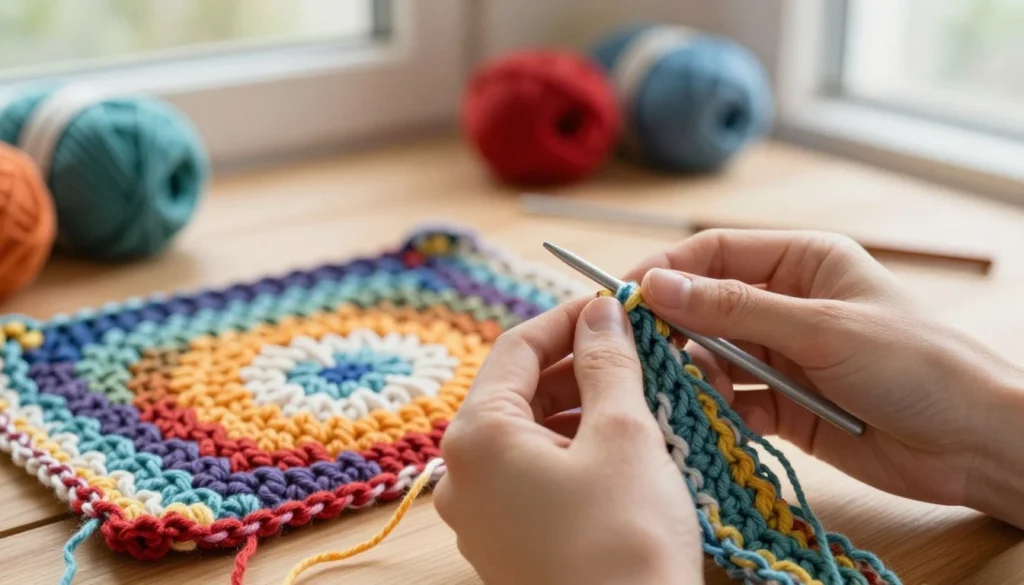
The very first step in any project is creating a secure crochet slip knot. Place your yarn on your fingers, create a loop, and pull the working yarn through to form a slip knot that slides easily onto your hook. Tighten it gently so it sits snugly against the shaft of the hook without being too restrictive.
Hold your hook in your dominant hand using either a pencil grip or a knife grip, depending on what feels most natural. Your non-dominant hand should manage the yarn tension by weaving it through your fingers. This setup allows you to maintain control as you begin your work.
Chain the Correct Number of Stitches
Once your hook is secure, you will start your foundation chain. For practice, try creating a chain of 20 stitches to get a feel for the rhythm. Yarn over your hook and pull the yarn through the loop currently on your hook to complete one chain stitch.
Repeat this motion until you have exactly 20 chains. Keep your tension even so that each loop looks uniform in size. If your chains are too tight, you will find it difficult to insert your hook later.
Recognize the Front and Back Bumps of the Chain
Each chain stitch has a distinct anatomy that you should learn to identify. When you look at your chain, you will see a “V” shape on the front, which consists of two loops. If you turn the chain over, you will notice a small bump on the back of each stitch.
Understanding these parts is vital for clean edges. Many beginners find that working into the back bump provides a much cleaner, more professional look for the bottom edge of their fabric.
Work Into the Correct Chain for an Even First Row
When you learn how to half double crochet, the placement of your first stitch is critical. You should skip the first two chains from your hook and insert your hook into the third chain. This skip accounts for the height of the half double crochet stitch, preventing the edge from bunching up.
| Chain Part | Visual Appearance | Best Use |
| Front V-Loop | Two strands forming a V | Standard decorative edges |
| Back Bump | Single horizontal ridge | Strong, uniform foundation |
| Third Chain | The starting point | Height for HDC stitches |
By placing your first stitch in the third chain, you ensure the row remains level. This technique prevents gaps and keeps your work from slanting as you progress. Consistent placement at the start of your row is the key to a perfect finish.
Work the Half Double Crochet Stitch Step by Step
This crochet hdc tutorial will guide you through the specific steps needed to build your fabric. By following this sequence, you will create a beautiful, textured row that serves as the foundation for many projects.
Step 1: Yarn Over Before Inserting the Hook
Start by wrapping your yarn over the crochet hook from back to front. This motion is essential for creating the extra loop that gives the stitch its unique height. Ensure the yarn is secure on the hook before you move to the next step.
Step 2: Insert the Hook Into the Target Stitch
Locate the correct chain stitch on your foundation row. Insert your hook directly into the center of that chain. Make sure you are catching the top loop or the back bump as required by your pattern.
Step 3: Yarn Over and Pull Up a Loop
Once the hook is inserted, wrap the yarn over the hook again. Carefully pull this new loop back through the chain stitch. You should now have three distinct loops resting on your hook, which is the hallmark of the half double crochet step by step process.
Step 4: Yarn Over and Pull Through All Three Loops
Perform one final yarn over. Use the hook to pull this yarn through all three loops currently on your hook at the same time. This action completes the stitch and secures it firmly in place.
Step 5: Repeat Across the Foundation Chain
Now that you know how to half double crochet, continue this process in each remaining chain stitch. Maintain a steady rhythm to ensure your work remains uniform. Repeat these steps until you reach the end of your foundation chain.
Keep Each Stitch at a Consistent Height
Try to pull your loops up to the same level for every stitch. If you pull too tightly, the fabric will become stiff and difficult to work with later. Relax your hands and let the hook do the work to maintain an even tension throughout the row.
Count Your Stitches After Completing the Row
Always count your completed stitches to verify they match your pattern requirements. If you find you have too many or too few, simply undo the last few stitches and try again. Accurate counting is the best way to ensure your project maintains a straight and professional edge.
Turn Your Work and Build Additional HDC Rows
Building additional rows requires a simple turning technique that keeps your edges straight and even. Once you reach the end of your foundation chain, you must rotate your piece to begin working back in the opposite direction. This process allows you to grow your fabric into a square or rectangular shape.
Make the Turning Chain for Half Double Crochet
To start a new row, you will create a turning chain. For the hdc stitch, you typically chain two stitches at the end of your row. This height matches the size of your stitches, ensuring the edge remains level as you progress.
Choose Whether the Turning Chain Counts as a Stitch
Patterns often vary regarding whether the turning chain counts as the first stitch of the row. You should check your specific instructions to see if you need to work into the base of the chain or skip it entirely. Consistency is key when you are working multiple HDC rows to ensure your stitch count remains accurate.
| Convention | Does Chain Count? | Action |
| Standard | No | Skip chain, work first stitch in the same space. |
| Alternative | Yes | Treat chain as a stitch, skip the first base stitch. |
| Hybrid | Varies | Follow specific pattern notes for clarity. |
Insert the Hook Under Both Top Loops
When you begin your next row, look at the top of the stitches from the previous row. You will see two loops forming a “V” shape. Always insert your hook under both of these loops to provide structural integrity to your fabric.
Repeat the HDC Stitch Across the Row
Continue the yarn-over and pull-through motion across the entire length of your work. Maintaining a steady rhythm helps keep your tension uniform. By repeating these steps, you will see your project grow steadily with each new row.
Work the Final Stitch Without Tightening the Edge
The final stitch of the row is often where beginners accidentally pull too tight. Keep your tension relaxed as you complete this last loop to prevent the edge from curling inward. A loose final stitch ensures that your next row will be easy to start.
Maintain Straight Sides as Your Fabric Grows
To keep your sides straight, count your stitches at the end of every row. If you find your piece is narrowing, you may be skipping the final stitch or working into the wrong loop. Taking a moment to verify your count will result in a professional finish for all your HDC rows.
Improve Your Tension, Gauge, and Stitch Control
Mastering your crochet tension is the secret to creating professional-looking fabric. When you maintain a steady rhythm, your stitches will appear uniform and your finished items will match the intended size. Proper control over your yarn flow directly impacts the density and drape of your work.
Relax Your Hands to Prevent Tight Stitches
Many beginners struggle with tight stitches because they grip the hook or yarn too firmly. If your hands feel tired or cramped, try to loosen your hold slightly. A relaxed grip allows the yarn to glide smoothly, resulting in a more flexible and comfortable fabric.
Use the Yarn-Over Motion to Create Even Loops
The way you wrap the yarn around your hook is a fundamental part of any hdc stitch tutorial. By keeping your yarn-over motion consistent, you ensure that every loop is the same size. This repetition helps build the muscle memory needed for perfectly even stitches across every row.
Make a Gauge Swatch Before Starting a Project
Before you begin a large project, you should always create an HDC gauge swatch. This small sample allows you to count how many stitches fit into a specific area, such as four inches. Comparing your results to the pattern requirements ensures your final piece will fit correctly.
Adjust Hook Size When Your Gauge Is Too Tight or Loose
If your swatch is smaller than the pattern suggests, your crochet tension is likely too tight. You can fix this by switching to a larger hook size to increase the stitch size. Conversely, if your fabric feels too loose or holey, try a smaller hook to tighten the weave.
Identify Uneven Edges and Correct Them Early
Uneven edges often signal that your tension is shifting as you work. Check your edges frequently to ensure they remain straight and tidy. If you notice a slant, pause and evaluate whether you are pulling the yarn differently at the start or end of your rows.
Keep the Working Loop at a Consistent Height
The height of your working loop determines the overall look of your stitches. Try to pull each loop up to the same level before completing the stitch. This simple habit prevents your fabric from looking wavy or distorted.
| Issue | Potential Cause | Recommended Fix |
| Fabric is too stiff | Tight grip | Use a larger hook |
| Fabric is too loose | Loose yarn flow | Use a smaller hook |
| Wavy edges | Inconsistent tension | Practice consistent loop height |
Fix Common Half Double Crochet Stitch Problems
Even the most experienced crocheters encounter mistakes when working with the half double crochet stitch. HDC troubleshooting is a natural part of your creative journey. You can easily resolve these issues by staying patient and observant.
Correct Missing or Extra Stitches
If your row count changes, you likely added or skipped a stitch. This is one of the most common crochet stitch errors for beginners. Always count your stitches at the end of every row to ensure consistency.
Repair a Stitch That Was Worked Into the Wrong Loop
Sometimes you might accidentally work into the front loop instead of both top loops. If you notice this, simply pull your yarn to unravel the work back to the mistake. Carefully re-insert your hook into the correct loops and continue your row.
Prevent Holes Between Stitches
Large gaps often appear if your tension is too loose or if you are not pulling your loops up evenly. Try to keep your yarn snug against the hook during the pull-through motion. Consistent tension helps create a solid, professional-looking fabric.
Fix Wavy, Slanted, or Narrowing Edges
Edges often become uneven if you skip the first or last stitch of a row. To fix HDC edges, ensure you are working into the very last stitch of the previous row. Consistent counting will keep your sides straight and clean.
Undo and Rework HDC Rows Safely
Do not be afraid to “frog” or unravel your work when you spot a mistake. Gently pull the working yarn to release the stitches until you reach the error. Place your hook back into the active loop and resume your pattern carefully.
Use Stitch Markers to Track the First and Last Stitch
Stitch markers are essential tools for keeping your work organized. Place a marker in the first and last stitch of every row to avoid confusion. This simple habit prevents you from accidentally skipping stitches at the ends.
Count Stitches Without Losing Your Place
Counting your stitches after every row is the best way to catch errors early. If you find it difficult to keep track, try these helpful tips:
- Use a physical row counter or a mobile app.
- Place a marker every ten stitches to make counting faster.
- Check your work under good lighting to see the stitch structure clearly.
- Take a short break if you feel frustrated to maintain your focus.
Practice the HDC Stitch With Simple Techniques
Your journey toward becoming a skilled crocheter begins with these fundamental practice techniques. Learning the hdc stitch for beginners is much easier when you focus on small, manageable goals rather than jumping into a large project immediately.
Practice on a Small Flat Swatch
Start by creating a simple HDC practice swatch to get comfortable with the movement. A small square allows you to test your tension without the pressure of finishing a complex garment. You can easily unravel and reuse the yarn if you make mistakes.
Repeat Rows to Build Muscle Memory
Consistency comes from repetition. Work several rows back and forth until the yarn-over, insertion, and pull-through motions feel natural. This muscle memory will eventually allow you to crochet without constantly looking at your hands.
Practice Working Into the Front Loop and Back Loop
Once you master the basic stitch, try working into different parts of the loop. Inserting your hook into only the front loop or only the back loop creates unique textures and ribbing effects. This simple variation adds versatility to your future designs.
Experiment With Color Changes and Clean Ends
Learning how to manage crochet color changes is a vital skill for any crafter. Practice joining a new color at the end of a row to keep your edges neat. Always weave in your yarn ends securely to ensure your work remains durable and professional.
- Keep your tension loose to avoid stiff fabric.
- Count your stitches at the end of every row.
- Use stitch markers to identify the first and last stitches.
- Practice maintaining a steady rhythm for even loops.
Check Your Fabric for Consistent Texture
Periodically inspect your work to ensure the stitches look uniform. If you notice gaps or uneven loops, adjust your grip on the hook or the tension of your yarn. A consistent texture is the hallmark of a well-made piece.
Record the Hook and Yarn Used for Future Projects
Keep a small notebook to document the materials you use for each practice session. Note the brand of yarn, the weight, and the size of the crochet hook. This record helps you replicate your favorite results accurately in future projects.
Use Half Double Crochet in Beginner-Friendly Projects
Now that you have mastered the basic mechanics of the stitch, it is time to apply your skills to real-world items. Transitioning from practice swatches to functional pieces helps you build confidence and refine your technique. These projects are designed to be simple while offering a great way to see your progress in action.
Make a Washcloth or Dishcloth
A simple square is the perfect starting point for any new crocheter. An HDC washcloth provides a dense, textured fabric that is both durable and absorbent. Because these items are small, you can finish them quickly and easily spot any tension issues.
Create a Scarf With Simple HDC Rows
If you want to practice consistency, an HDC scarf is an excellent choice. Working in long, straight rows allows you to develop a steady rhythm and perfect your edge control. The resulting fabric has a lovely drape that feels soft and cozy against the skin.
Work a Cozy Hat or Headband
Once you feel comfortable with flat rectangles, you can try making a hat or headband. These projects introduce the concept of working in the round or seaming edges together. The density of the stitch ensures your finished accessory will be warm and wind-resistant.
Combine HDC With Borders, Stripes, and Other Stitches
You can elevate your work by adding simple decorative elements. Try alternating colors to create bold stripes or adding a single-crochet border to give your edges a polished look. Mixing stitches helps you understand how different textures interact within a single piece.
Estimate Yarn Needs From Your Gauge Swatch
Before you begin a large project, always use your gauge swatch to calculate how much yarn you will need. Weighing your swatch or measuring the length of yarn used per square inch provides a reliable estimate. This simple step prevents the frustration of running out of yarn mid-project.
Choose Projects That Reinforce Your New Skills
Select patterns that focus on the fundamentals of counting and turning. Projects that require you to maintain a specific stitch count across every row will sharpen your attention to detail. Consistent practice with these manageable items ensures you are ready for more complex patterns in the future.
| Project Type | Skill Focus | Best Yarn Weight |
| Washcloth | Tension Control | Medium (Worsted) |
| HDC Scarf | Edge Consistency | Light to Medium |
| HDC Hat | Shaping and Seaming | Medium (Worsted) |
| Headband | Stitch Counting | Bulky |
Conclusion
You now possess the skills to create beautiful items using the half double crochet stitch. This technique relies on a simple sequence of yarning over, inserting your hook, pulling up a loop, and drawing through all three loops on your hook.
Consistency remains the secret to professional results. Keep your tension steady and count your stitches carefully on every row. Always work into both top loops to maintain a clean edge and check your final stitch to prevent accidental increases or decreases.
The half double crochet stitch creates a dense, soft fabric that works up quickly. Start your next project with a small practice swatch using Lion Brand or Red Heart yarn to build your confidence. You will find that this versatile stitch serves as the perfect foundation for hats, scarves, and home decor items.
FAQ
What is the main difference between the half double crochet stitch and a double crochet?
The primary difference is how you finish the stitch. In a double crochet, you pull through two loops at a time, twice. In an HDC stitch, you yarn over and pull through all three loops on the hook simultaneously, resulting in a shorter, denser stitch.
Why does my hdc stitch tutorial suggest skipping two chains at the start?
Those two skipped chains act as a “turning chain.” They provide the necessary height so that your first row of half double crochet doesn’t bunch up or slant at the beginning.
Can I use the hdc stitch for beginners to make a blanket?
Absolutely. The half double crochet is excellent for blankets because it grows faster than a single crochet but is warmer and less “holey” than a double crochet.
How do I know if I should count the turning chain as a stitch in my half double stitch guide?
Most modern patterns do not count the ch-2 as a stitch. However, if your edges look like they have gaps, you might be counting it. Always refer to the pattern notes or choose one method and stay consistent throughout your project.
What is the “third loop” in a half double crochet stitch explanation?
Because of the yarn-over, the HDC creates a third loop that sits just behind and below the top “V” of the stitch. Working into this loop pushes the top “V” forward, creating a knit-like braided texture.
Is the half double crochet step by step process different for left-handed crocheters?
The mechanics of the yarn-over and pull-through are identical. The only difference is the direction of travel; left-handed crocheters work from left to right across the foundation chain.
Why is my hdc stitch tutorial fabric turning out stiff?
If the fabric feels like a board, your tension is likely too tight or your hook is too small. Try using a larger hook, such as a 6.0mm (J-10), to give the stitches more room to breathe.
How to half double crochet into the next row without losing stitches?
The most common mistake is missing the very last stitch of the row. It often leans slightly to the side. Using a stitch marker in the first stitch of every row will help you identify exactly where the last stitch of the return row should go.